16-meter ink painting depicts epic of Long March in northern Guangdong
原創 羊城晚報•羊城派
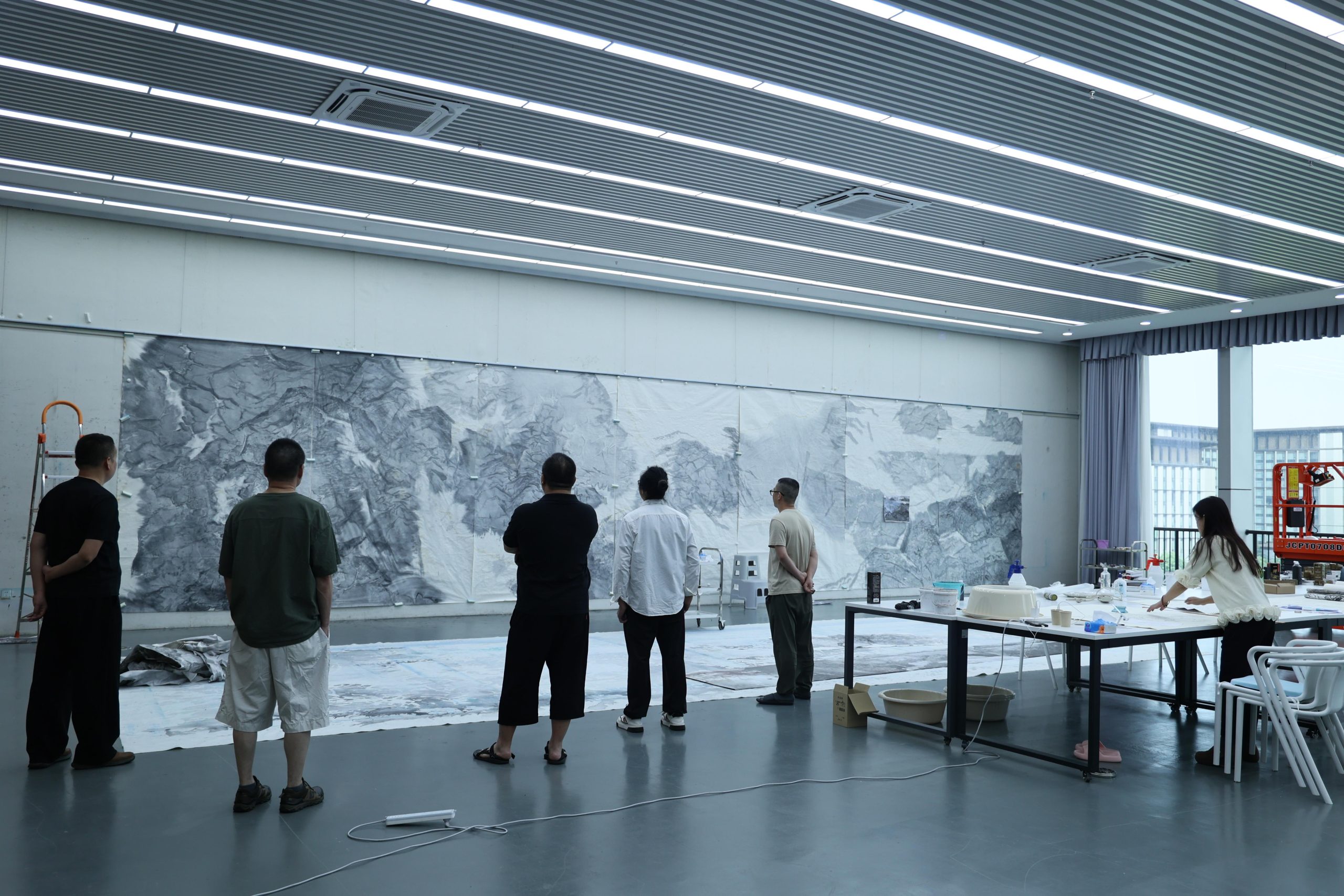
A monumental 16-meter Chinese ink painting on the Long March, “Long March Trail in Nanling Mountains,” created by the Guangdong Academy of Painting, went on public display recently.
The peaks of northern Guangdong rise in layers of ink, revealing vivid scenes among the vast, mist-shrouded mountains and forests: marching Red Army soldiers, fierce blocking battlesand soldiers and civilians on an old street.
Beginning on October 25th, 1934, the main force of the Central Red Army’s Long March moved through northern Guangdong, passing through Nanxiong, Renhua and Lechang, among other places. After fierce fighting, it broke through enemy blockades and carved out a westward route. From October 31st, Red Army units began entering Renhua, launching a surprise attack on Chengkouand fighting fiercely at Tongguling. They broke through the Kuomintang army’s second blockade along the Guangdong-Hunan border, creating favorable conditions for the Central Red Army to continue its westward advance.
The monumental painting “Long March Trail in Nanling Mountains” depicts precisely this historic chapter that unfolded across the landscapes of northern Guangdong.
Rooted in the tradition of Chinese landscape painting, the work integrates local scenery, historical narratives and the spirit of the Long March into a monumental composition. The creative team structured the painting according to the traditional compositional progression of introduction, development, transition and conclusion. Its four sections depict the ancient route into Guangdong, the old town of Chengkou, the fierce battle at Tongguling and the onward journey. Together, they form a sweeping landscape painting with both grandeur and vivid narrative detail.
Zheng Apai, vice-president of the Guangdong Academy of Painting, said, “We wanted to capture the vastness of the mountains in northern Guangdong and the lush greenery of the Nanling range, while incorporating the stories of the Long March that unfolded here. This is what sets the work apart from previous artistic depictions of the Long March.”
Beyond the painting’s powerful overall impact, its details become clearer on closer inspection. Scenes unfold across the vast canvas: Red Army soldiers launching a nighttime surprise attack on Chengkou, fierce blocking fighting in the mountains of Tongguling, and troops advancing along mountain paths. In the area around Red Army Street, moving scenes show local residents removing their door panels to make beds for the soldiers and bringing them meals and cloth shoes. Through these delicate brushstrokes, the deep bonds between the army and the people gradually emerge.
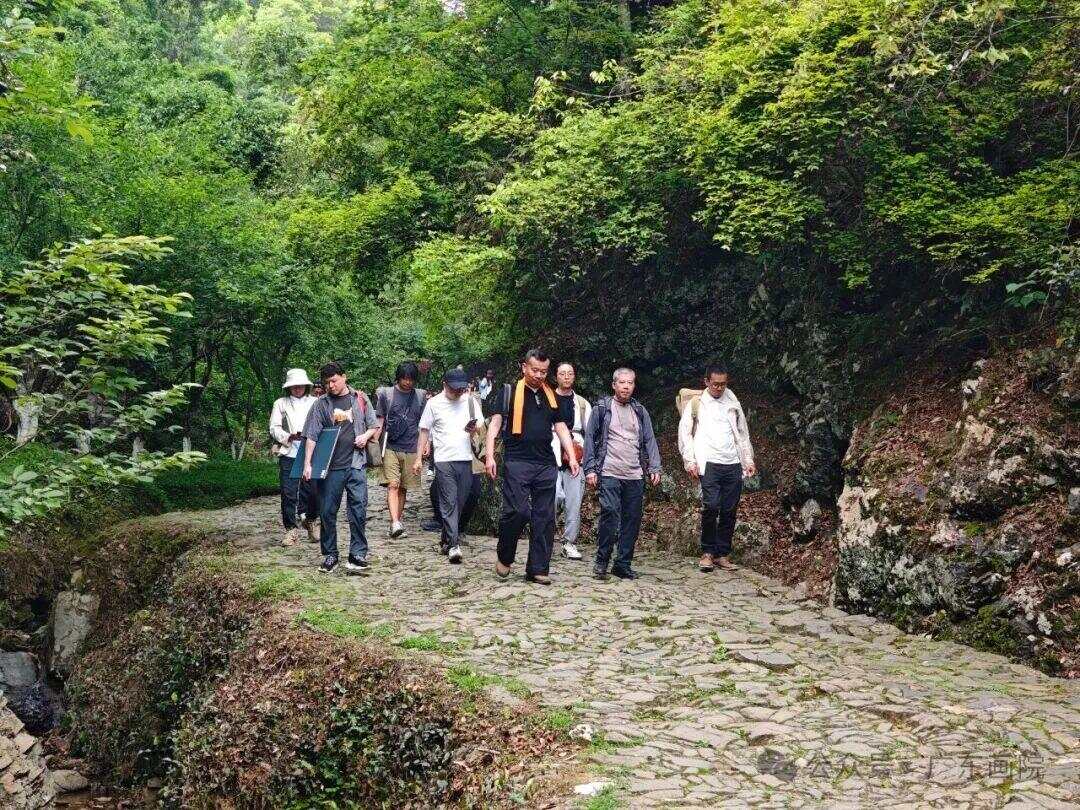
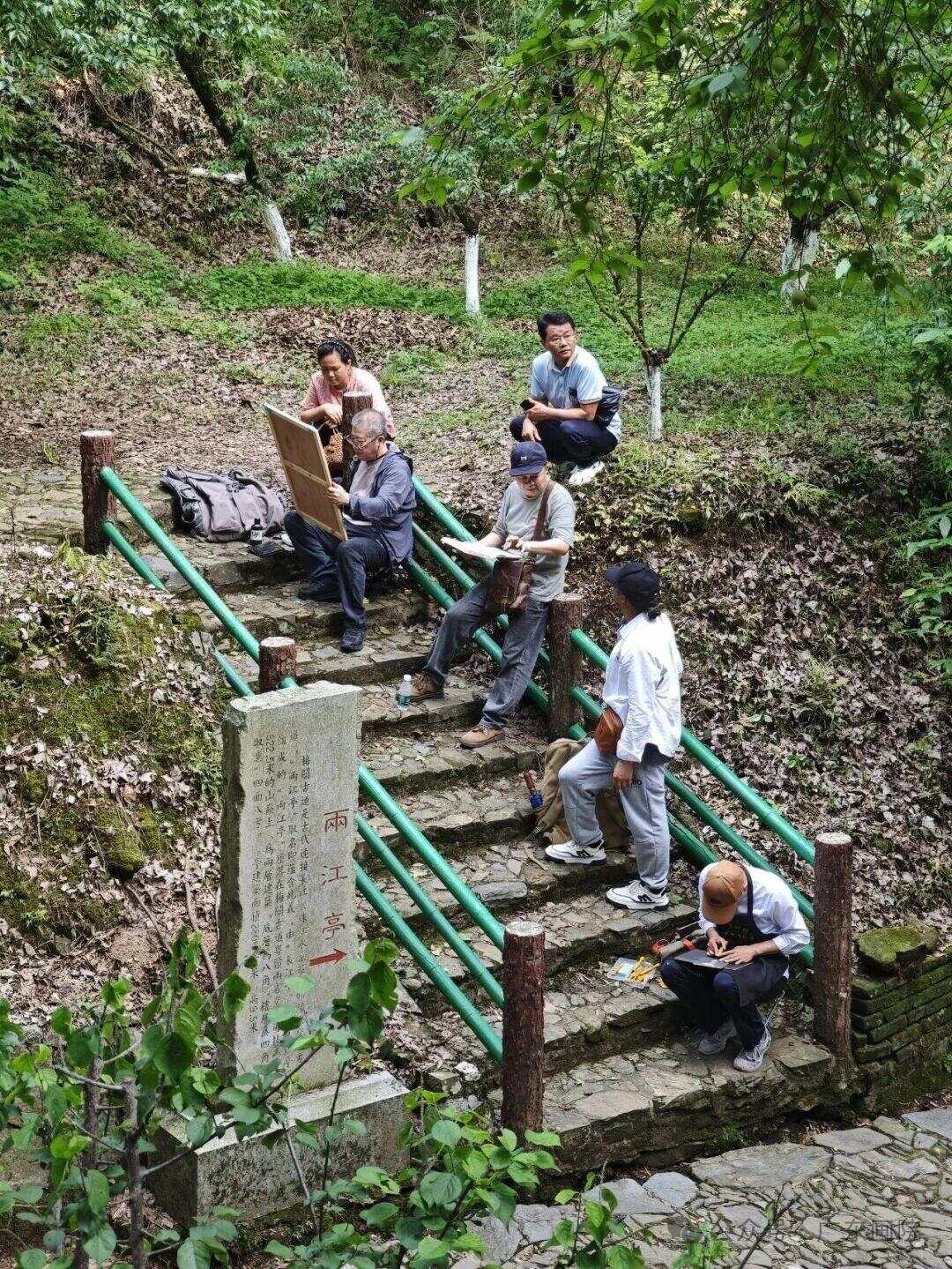
In April this year, the Guangdong Academy of Painting launched a field-research initiative to commemorate the 90th anniversary of the victory of the Long March by the Chinese Workers’ and Peasants’ Red Army. Zheng Apai, vice-president of the academy; Du Ning, president of the Guangdong Youth Academy of Painting; and full-time and resident painters from the Guangdong Academy of Painting, along with artists from the Guangdong Youth Academy of Painting, traveled to Shaoguan, Ganzhou and other places to sketch and conduct field research. They visited the mountains and ancient routes of northern Guangdong, as well as revolutionary sites, observing the landscape firsthand and seeking historical details in local records and community memories. “We were not imagining history while sitting in the studio,” Du Ning said.
Drawing on oral accounts from people with firsthand knowledge and local historical records, the creative team uncovered many moving stories of interactions between Red Army soldiers and local residents, translating them into vivid details in the painting. On-site sketching also provided fresh, firsthand material for the work. “Only with firsthand material can the subsequent artistic creation truly gain depth and richness,” Du said.
Du sees the project as a kind of “Long March” for artists. “We are always on the road, too, undertaking our own ‘Long March’.” The road he describes is both a creative journey of engaging deeply with everyday life and taking root among the people, and a continuing quest to explore artistic expression. For contemporary artists, the enduring purpose of this journey lies in drawing nourishment from China’s fine traditional culture, responding to the times through new forms of expression and portraying the people.
Source:PEARL
廣東畫院創作16米水墨畫卷,再現粵北長征史詩
日前,廣東畫院組織創作的長征主題16米巨幅中國畫《南嶺長征路》正式展出。
粵北羣峯在墨色中層疊而起,蒼茫的山林間,一幕幕生動畫面浮現:行進的紅軍、激烈的阻擊戰、古街上軍民的身影……
1934年10月25日起,中央紅軍長征主力部隊轉戰粵北,先後經過南雄、仁化、樂昌等地,成功突破敵人封鎖線,浴血拼出一條西進通道。10月31日起,紅軍部隊陸續進入仁化境內,奇襲城口、鏖戰銅鼓嶺,突破國民黨軍設置在粵湘邊界的第二道封鎖線,爲中央紅軍繼續西進創造了有利條件。
巨幅中國畫《南嶺長征路》描畫的正是這段發生在粵北山河間的故事。
作品以中國山水畫爲本體,將地域景觀、歷史敘事與長征精神融入這幅巨型畫面。按照主創團隊的設想,整件作品採用起、承、轉、合的傳統章法,以入粵古道、城口古鎮、銅鼓嶺血戰、征途向前四個部分譜寫氣勢雄渾、敘事完整的山水畫大作。全卷既具山水之雄渾開闊,又含敘事之精微生動。
廣東畫院副院長鄭阿湃說:“要把粵北山區的蒼茫、南嶺山川的鬱鬱蔥蔥表現出來,同時把發生在這裏的長征故事放進去,是這件作品和以往長征題材創作不一樣的地方。”
除了整體畫面的衝擊,更耐人尋味的是走近才能看清畫中景物:夜色中紅軍奇襲城口、銅鼓嶺山間的激烈阻擊、行進在山道上的隊伍,以及紅軍街一帶,老百姓拆下門板爲紅軍做牀鋪、爲紅軍送飯送布鞋的感人場景依次出現在巨幅國畫中。軍民間的情誼,也由這些細小筆觸漸漸顯露出來。
今年4月,廣東畫院紀念中國工農紅軍長征勝利90週年考察活動啓動,廣東畫院副院長鄭阿湃、廣東青年畫院院長杜寧,以及廣東畫院專職畫家、在職畫家,廣東青年畫院畫家等前往韶關、贛州等地寫生、採風。他們走進粵北山嶺、古道與紅色舊址,在現場感受地貌風物,也在地方史料與羣衆記憶中尋找歷史細節。“我們不是坐在畫室裏想像歷史。”杜寧說。
主創團隊藉助親歷者口述與地方史志記載,挖掘出不少紅軍與羣衆互動的感人故事,最終轉化爲畫面中的生動細節。實景寫生則爲本次創作收集了最鮮活、最紮實的創作素材。“只有拿到第一手材料,後面的創作才能真正豐滿起來。”杜寧說。
杜寧把這次創作看作屬於美術工作者的一次“長征”。“我們其實一直在路上,也在走屬於我們自己的‘長征’。”而他所說的這條“路”,既是深入生活、紮根人民的創作之路,也是不斷探索藝術語言的求索之路。如何從中華優秀傳統文化中汲取養分,以新的表達回應時代、爲人民畫像,正是當代藝術家始終在路上的意義。
譯 | 鄭書悅
審 | 盛嘉