I Want My Son to Have a Future AI Cannot Predict. How to Connect the Dots?
我想讓兒子擁有一個人工智能無法預測的未來,該如何規劃人生?
China Shaping the Future 塑造未來的中國
by Leo Zhang 作者:利奧·張
[In Perspective] [深度觀察]
Share Article: 分享文章:
My son Eddie is in his final year of high school in Shanghai. Next year, he will take the gaokao, the national college entrance examination that can shape a young person’s academic and professional future. Like many parents, my wife and I have begun discussing with him career choices.我的兒子埃迪正在上海讀高中最後一年。明年,他將參加高考——這場全國性的大學入學考試,足以決定一個年輕人的學業和職業走向。和許多父母一樣,我和妻子也開始和他探討職業選擇。
Eddie is good at computer programming. He won a first prize in a programming competition and is strong in mathematics and logic. By conventional measures, computer science or engineering would seem a natural choice. We should be encouraging him to go further.埃迪擅長計算機編程。他在一次編程比賽中獲得了一等獎,而且數學和邏輯能力很強。按照常規標準來看,計算機科學或工程學似乎是他很自然的選擇。我們應該鼓勵他繼續深造。
Then AI entered the conversation. 然後人工智能也成了討論的話題。
If machines can already write so much code, Eddie asked us, what’s the sense to learning to program? Interesting question. If AI keeps improving at the very things he is good at, how can he know whether a computer science degree will lead anywhere?埃迪問我們,如果機器現在已經能寫這麼多代碼了,那學習編程還有什麼意義?這是個有趣的問題。如果人工智能在自己擅長的領域持續進步,他又該如何確定計算機科學學位是否能帶來什麼發展呢?
We spent hours discussing with him technologies, industries and possible careers. We tried to identify the skills employers will most need in the future and which university majors are most likely to remain valuable. The more possibilities we considered, the harder it became to reach a confident conclusion.我們花了數小時和他探討技術、行業以及可能的職業方向。我們試圖找出僱主未來最需要的技能,以及哪些大學專業最可能保持價值。我們考慮的可能性越多,就越難得出一個確定的結論。
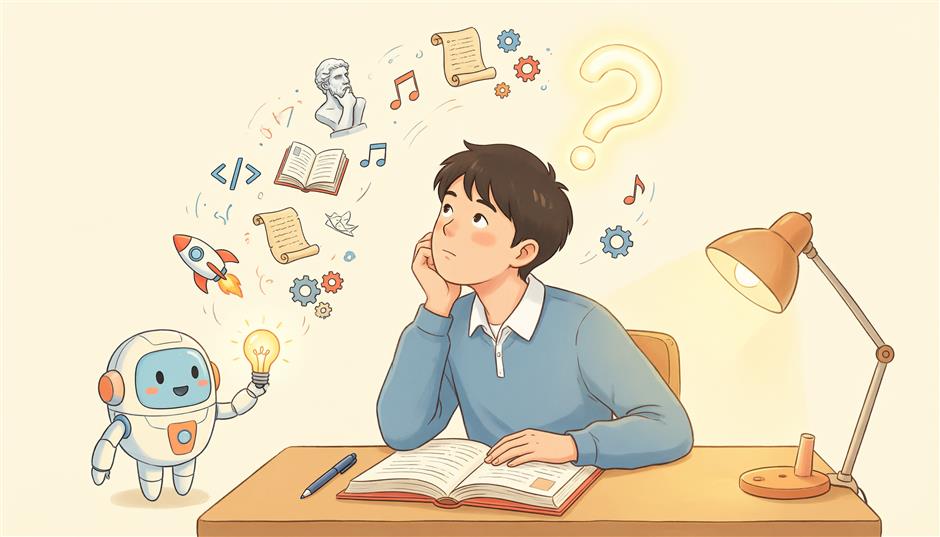
Credit: AI-generated來源:AI生成
I”m a journalist and a university teacher. My work involves asking questions, examining evidence and making sense of complicated subjects. Yet when my son asked me to help him choose his future, I could not offer the certainty parents are supposed to provide.我是一名記者,也是一名大學教師。我的工作包括提出問題、覈查證據以及解讀複雜的議題。然而,當兒子讓我幫他規劃未來時,我卻無法給出父母理應提供的確定答案。
Perhaps it wasn’t that we failed to find the right answer but that question itself had become harder to answer.或許不是我們沒能找到正確的答案,而是問題本身變得更難解答了。
For generations, education has encouraged young people to choose a field, master its tools and build a career around their expertise. But what happens when machines become extraordinarily good at mastering the tools?幾代人以來,教育一直鼓勵年輕人選擇一個領域,掌握其相關技能,並圍繞自身專業技能開啓職業生涯。但當機器變得極其擅長掌握這些技能時,又會發生什麼呢?
Confusing expertise with security 將專業能力與安全感混爲一談
Specialization made modern economies possible. Hospitals need trained doctors, factories need skilled engineers, and businesses need able accountants and programmers. Universities developed disciplines and qualifications to prepare people for increasingly complex work.專業化讓現代經濟成爲可能。醫院需要訓練有素的醫生,工廠需要技藝精湛的工程師,企業則需要能幹的會計和程序員。大學設立了學科體系和資質認證,爲人們應對日益複雜的工作做好準備。
The arrangement offered a compelling bargain. Study hard, acquire expertise and earn a degree that opens the door to a profession. With experience, your skills become more valuable. The longer you work, the more you know.這種安排極具吸引力。努力學習,掌握專業技能並獲得學位,以此開啓職業生涯。隨着經驗積累,你的技能會變得更有價值。工作時間越久,你懂得的就越多。
I grew up with much the same understanding. Find something you are good at, work hard at it and become sufficiently accomplished that other people will need you.我也是在這樣的認知下長大的。找到自己擅長的事,爲之努力奮鬥,達到足夠出色的水平,讓別人都需要你。
There is nothing wrong with that advice. The trouble begins when a sensible principle becomes a promise: Find the right specialty and you will be safe.這條建議本身沒有任何問題。麻煩出在當一個合理的原則變成了一種承諾時:找到合適的專業領域,你就會高枕無憂。
That promise was never entirely reliable. Industries decline, technologies change and workers retrain. AI, however, is challenging an assumption that has long underpinned professional life: That the skills we spend years acquiring will remain scarce long enough to support a stable career.這一承諾從來都並非絕對可靠。行業會衰退,技術會更迭,勞動者也需要重新培訓。然而,人工智能正挑戰着長期支撐職業生涯的一個前提假設:我們花費多年時間習得的技能,將長期保持稀缺性,足以支撐一份穩定的職業。
The World Economic Forum’s Future of Jobs Report 2025, based on a survey of more than 1,000 employers, estimates that 39 percent of workers’ existing skillsets will be transformed or become outdated by 2030. It also projects that 170 million jobs will be created and 92 million displaced globally between 2025-2030, a net increase of 78 million.世界經濟論壇《2025年未來就業報告》基於對1000多家僱主的調查估計,到2030年,39%的勞動者現有技能將發生轉型或變得過時。該報告還預測,2025至2030年間,全球將新增1.7億個就業崗位,同時有9200萬人將失去工作,淨增就業崗位7800萬個。
These are employer-based projections, not predictions of any individual’s fate. Nor are all the changes attributable to AI. But they underline a difficult reality: The relationship between education and employment is becoming harder to predict.這些是基於僱主的預測,並非針對任何個人命運的判斷。也並非所有變化都可歸因於人工智能。但它們凸顯了一個嚴峻的現實:教育與就業之間的關係正變得越來越難以預測。
The answer is not to abandon specialization. Society will always need people who can develop medicines, build bridges, secure computer networks and investigate difficult scientific questions. The problem is treating a specialty as a permanent identity rather than a foundation for further learning.答案並非是放棄專業化。社會永遠需要能夠研發藥物、建造橋樑、保障計算機網路安全以及探究複雜科學問題的人才。問題在於將專業特長當作一種永久的身份,而非進一步學習的基礎。
A degree can still open doors. It cannot promise that the world behind those doors will remain unchanged.學歷依舊能爲你打開一扇扇門,但它無法保證門後的世界永遠一成不變。
When the machine can do the work, what is the work worth?當機器能完成工作時,這份工作的價值何在?
Consider computer programming, the field that prompted Eddie’s questions.以計算機編程爲例,這正是引發埃迪提出那些問題的領域。
Writing code demands logic, precision and a detailed understanding of how systems work. For years, translating a complex problem into working software was a valuable technical skill. AI tools can now generate, explain and debug code, sometimes at remarkable speed.編寫代碼需要邏輯、精準,還得深入理解系統的運行原理。多年來,將複雜問題轉化爲可用的軟體一直是一項寶貴的技術技能。而如今,人工智能工具能夠生成、解釋並調試代碼,有時速度還十分驚人。
In a controlled experiment published in 2023, researchers found that developers using GitHub Copilot completed a specific JavaScript programming task 56 percent faster than those without access to the tool. The task involved building an HTTP server, not the full range of work involved in software development. The result cannot tell us how much AI will improve productivity across the profession, but it demonstrates that some tasks can be completed much faster with AI assistance.在2023年發表的一項對照實驗中,研究人員發現,使用GitHub Copilot的開發人員完成一項特定的JavaScript編程任務的速度,比無法使用該工具的開發人員快56%。該任務僅涉及搭建HTTP伺服器,並非軟件開發中的全部工作。這一結果無法告訴我們人工智能將在多大程度上提升整個行業的生產力,但它證明了藉助人工智能的輔助,部分任務的完成速度可以大幅提升。
Programmers are not therefore about to become obsolete. Software still has to solve real problems. Generated code must be tested, secured, integrated and maintained. Someone must decide what a system should do, whether it works reliably and whether it is worth building at all.因此程序員並不會就此被淘汰。軟體仍需解決實際問題。生成的代碼必須經過測試、加固、整合和維護。必須有人來決定系統應具備的功能、運行是否可靠,以及是否值得開發。
Yet the relative value of different abilities may change. When producing code becomes easier, the ability to identify the right problem, define the requirements and judge the proposed solution can become more important.然而不同能力的相對價值可能會發生變化。當編寫代碼變得更容易時,找出正確問題、明確需求以及評估解決方案的能力就可能變得更爲重要。
Imagine a company using AI to build a new app. Generating the code is only one part of the job. Someone must understand what customers actually need, recognize the trade-offs between convenience and privacy, and decide whether the product solves a problem worth solving. A technically impressive app that nobody needs is still a failure.想像一下一家公司利用人工智能開發一款新應用程序。編寫代碼只是工作的一部分。必須有人真正理解客戶的需求,認清便捷性與隱私保護之間的權衡,並且判斷該產品是否解決了值得解決的問題。一款技術上十分出色卻無人問津的應用程序,最終依然是失敗之作。
The same distinction applies beyond programming. AI can help draft a legal document, summarize medical research or prepare a marketing campaign. But producing an answer is not the same as deciding whether it is fair, clinically appropriate or worth pursuing.同樣的區分也適用於編程之外的領域。人工智能可以協助起草法律文件、總結醫學研究成果或策劃營銷活動。但生成答案與判斷其是否公平、是否符合臨牀規範以及是否值得推進並非同一回事。
The future may reward people who combine technical competence with judgment and an understanding of human needs. A programmer who understands a business problem, the people using the product and the consequences of getting it wrong may contribute more than someone who can only produce code quickly.未來可能會嘉獎那些兼具技術能力、判斷力與對人類需求的理解的人。一個既瞭解業務問題、又清楚產品使用者以及出錯後果的程序員,或許比只會快速編寫代碼的人做出更大的貢獻。
We are not at the end of requiring expertise; we are at a point of change in what expertise must include.我們並非處於對專業知識的需求走向終結之時,而是正處在專業知識所必須包含的內容發生變革的節點。
People who connect the dots 能把零散線索串聯起來的人
Elon Musk recently argued for a broad-based education spanning the arts, sciences and engineering. His reasoning was that people need enough general knowledge to formulate good questions for increasingly capable AI systems and robots.埃隆·馬斯克近期倡導一種涵蓋藝術、科學與工程的通識教育。他的理由是,人們需要足夠的通識知識,才能爲能力日益強大的人工智能系統和機器人提出優質問題。
His words struck me as Eddie and I debated university majors. They challenge an educational instinct many of us have inherited, namely that you should choose a field, concentrate on it and avoid distractions.在我和埃迪爭論大學專業時,他的話讓我深受觸動。這些話挑戰了我們許多人與生俱來的一種教育本能,即你應該選擇一個領域,專注於它,避免分心。
Consider Richard Feynman, the Nobel Prize-winning physicist whose work helped transform our understanding of quantum electrodynamics. His reputation rested on formidable technical ability, not on being a dilettante. Yet he was also curious about subjects beyond physics, from art and music to Mayan hieroglyphics, and had a remarkable gift for explaining difficult ideas.想想諾貝爾獎得主、物理學家理查德·費曼吧,他的研究成果極大推動了我們對量子電動力學的認知。他的聲望源於其精湛的專業能力,而非作爲一名業餘愛好者。但他同時也對物理學之外的領域充滿好奇,從藝術、音樂到瑪雅象形文字,並且擁有闡釋複雜概念的非凡天賦。
Feynman’s example is not that knowing a little about everything makes someone exceptional. It is that deep expertise and intellectual curiosity can reinforce each other. Looking at a problem from another angle may reveal an assumption that specialists working within a familiar framework have overlooked.費曼的例子並非說明什麼都略知一二就能出類拔萃,而是表明深厚的專業知識與求知慾能夠相互促進。從另一個角度審視一個問題,或許能發現那些在熟悉框架內鑽研的專家們所忽略的前提假設。
We need people who can go deep without becoming blind to what lies beyond their field.我們需要這樣的人:既能深耕專業,又不會對自己領域之外的事物視而不見。
I think of them as integrators. 我把他們視爲整合者。
An integrator connects knowledge, people and technologies to achieve something meaningful. In software, that person might understand enough about engineering, design and customer behavior to see why a technically elegant solution will fail in practice. In medicine, it might mean combining scientific evidence with an understanding of a patient’s circumstances. In journalism, it means connecting a statistic to the policy decision behind it and the people who will live with the consequences.整合者聯結知識、人與技術,以成就有意義的事。在軟體領域,這類人或許對工程、設計和用戶行爲有足夠的瞭解,能洞悉爲何技術上精妙的方案在實際中會失效。在醫學領域,這可能意味着將科學證據與對患者病情的理解相結合。在新聞行業,它意味着將一項統計數據與其背後的政策決策以及將承受其後果的人們聯繫起來。
AI can assist with many of the individual tasks. But someone must still define the purpose, weigh competing priorities and take responsibility for the outcome.人工智能可以協助完成許多具體任務。但仍需有人明確目標、權衡相互衝突的優先級,併爲結果承擔責任。
This does not mean Eddie should abandon computer science for philosophy, or choose it because it sounds more human than coding. The more interesting possibility is that he could study one seriously while allowing the other to change how he thinks.這並不意味着埃迪應該爲了哲學而放棄計算機科學,也不應該因爲哲學聽起來比編程更具人文氣息就選擇它。更有意思的可能性是,他可以深入鑽研其中一門學科,同時讓另一門學科改變自己的思維方式。
Depth gives us something to contribute. Breadth helps us understand where that contribution belongs.深度賦予我們可貢獻的價值。廣度幫助我們明晰這份價值的歸屬。
The contradiction in education 教育中的矛盾
There is an uncomfortable question for schools and universities here. We tell students to prepare for a changing world, yet many educational systems reward them for following a prescribed path. Students are encouraged to explore, but their performance is often measured by exams, credentials and the ability to produce the expected answer.對於這裏的中小學和大學來說,有一個令人不安的問題。我們告訴學生要爲不斷變化的世界做好準備,然而許多教育體系卻獎勵那些循規蹈矩的學生。學生們被鼓勵去探索,但他們的表現往往是通過考試、學歷證書以及給出標準答案的能力來衡量的。
In China, where a high-stakes examination helps determine access to university, the pressure to make the right choice is understandable. Families want their children’s years of hard work to lead somewhere. They cannot simply ignore employment prospects and hope curiosity will pay the bills.在中國,一場決定大學入學資格的高風險考試左右着學生的未來,因此做出正確選擇的壓力是可以理解的。每個家庭都希望孩子多年的努力能有回報。他們不能只看就業前景,也不能指望僅憑興趣就能維持生計。
But if the future is difficult to predict, education cannot be only about identifying the right major and accumulating the right qualifications. It must be about preparing students to change direction when their assumptions no longer hold.但如果未來難以預測,教育就不能只關乎選擇合適的專業和積累相應的資質。它必須致力於培養學生,讓他們在自身的假設不再成立時能夠調整方向。
The World Economic Forum’s report points to rising demand for technological skills, including AI and big data, alongside capabilities such as analytical thinking, creative thinking, resilience and lifelong learning. The message is not that technical skills matter less. It is that technical competence and the capacity to adapt are becoming increasingly intertwined.世界經濟論壇的報告指出,對人工智能、大數據等技術技能的需求不斷上升,同時也需要分析性思維、創造性思維、抗壓能力和終身學習等能力。這並非意味着技術技能不再重要,而是技術能力與適應能力正變得越來越密不可分。
For journalists, learning how to learn is familiar. A good reporter identifies what matters, finds reliable evidence, distinguishes fact from assumption and revises an initial judgment when the evidence changes. Expertise in asking questions is essential, but so is the willingness to question the answers.對於新聞從業者而言,學會如何學習是家常便飯。一名優秀的記者能找準重點,找到可靠的證據,區分事實與假設,並在證據發生變化時修正最初的判斷。精通提問至關重要,而願意質疑答案同樣不可或缺。
Students need the same combination. They need rigorous training, technical knowledge and the discipline to finish difficult work. They also need room to follow an unexpected question, read outside their majors and develop interests whose economic value is not immediately apparent.學生們也需要同樣的綜合素養。他們需要嚴謹的訓練、專業技術知識以及完成艱鉅任務的自律性。同時,他們也需要空間去探究突發的問題、跨專業閱讀,並培養那些經濟價值並非立竿見影的興趣。
A broad education is no substitute for competence. Curiosity alone does not pay the bills. But a person who can learn, connect ideas and adapt has more ways to respond when circumstances change.廣博的教育無法替代專業能力。僅憑好奇心無法維持生計。但一個善於學習、融會貫通且懂得適應的人,在環境變化時擁有更多應對之策。
The goal is not to produce people who know everything. It is to help them keep learning when what they know is no longer enough.目標不是培養無所不知的人,而是幫助他們在自身認知不再足夠時持續學習。
What I can tell my son 我想對兒子說的話
After our discussions, Eddie seemed to set aside some of his anxiety, at least for the moment. He did not announce that he had resolved his future. Instead, he went back to doing things that interest him.經過我們的討論,埃迪似乎暫時放下了一些焦慮,至少此刻是這樣。他沒有宣佈自己已經解決了未來的問題,而是重新去做那些讓他感興趣的事。
He writes a poem every month. He has been adding history books to his shelf. Recently, I noticed a book on philosophy beside his bedside. When we talked, he said he might study philosophy because it interests him, too.他每個月都會寫一首詩。他一直在往書架上添歷史書。最近,我注意到他牀邊放着一本哲學書。我們聊天時,他說自己或許也會學哲學,因爲這讓他感興趣。
I smiled at that. We had spent hours trying to forecast the labor market, compare emerging technologies and identify the major least likely to become a dinosaur in the work world. My son responded by reading poetry, history and philosophy.我對此笑了笑。我們花了數小時試圖預測勞動力市場、比較新興技術,並找出那些在職場中最不可能被淘汰的行業。而我的兒子則通過閱讀詩歌、歷史和哲學來充實自己。
He has not given up programming, nor should he. His mathematical ability and technical talent matter. But perhaps his interests are reminding both of us that choosing a field of study need not mean closing every other door.他沒有放棄編程,他也不該放棄。他的數學能力和技術天賦至關重要。但或許他的興趣在提醒我們所有人:選擇一個研究領域並不意味着關上其他所有的門。
I still cannot tell him which major will offer the best prospects when he graduates. No honest parent can promise that a degree will retain the same value for the next 30 or 40 years. I can encourage him to take his abilities seriously, remain curious about the world beyond them and resist measuring every interest by its immediate economic return.我仍然無法告訴他哪個專業能在他畢業時帶來最好的前景。沒有一位坦誠的家長能保證一個學位在未來30到40年裏仍保持同樣的價值。我能做的是鼓勵他認真對待自己的能力,對能力之外的世界保持好奇,並且拒絕用即時的經濟回報來衡量每一種興趣。
This is also where the question becomes personal for me. As a father, I want to give Eddie a reliable map. As a journalist, I know the evidence does not support one. Pretending otherwise would be comforting, but it would not help him prepare for the world he will actually enter.這也是這個問題對我來說變得私人的時刻。作爲一名父親,我想給埃迪一份可靠的人生指引。但作爲一名記者,我清楚沒有任何證據能證明這樣的指引存在。假裝有這樣的指引或許能讓人安心,卻無法幫他真正爲即將踏入的世界做好準備。
Perhaps the challenge of raising children in the age of AI is not to predict their future accurately. It is to help them face uncertainty without mistaking it for failure.或許在人工智能時代養育孩子的挑戰,並非精準預測他們的未來,而是幫助他們直面不確定性,同時不將其誤判爲失敗。
For a long time, education has encouraged us to ask: What do I want to become? In this age, we may need to ask another question: Who will I be able to become when the world changes?長久以來,教育一直鼓勵我們去追問:我想成爲什麼樣的人?而在當下這個時代,我們或許還需要提出另一個問題:當世界發生改變時,我又能成爲什麼樣的人?
I cannot promise Eddie a safe career. I can hope he develops the judgment to choose worthwhile problems, the curiosity to explore unfamiliar territory and the resilience to begin again when the answers change.我無法向埃迪保證一份安穩的職業。我只希望他能培養出明辨是非的判斷力,去選擇有價值的課題;擁有探索未知領域的好奇心,以及在答案改變時重新出發的韌性。
If he becomes a programmer who writes poetry, a philosopher who understands code or something for which we do not yet have a job title, perhaps he will not have strayed from the path.如果他成爲一個寫詩的程序員、懂代碼的哲學家,或是一個我們目前尚無職稱的角色,或許他並未偏離正軌。
Perhaps he will have learned that the path was never the point.或許他會明白,這條路從來都不是重點。
(The author is an adjunct research fellow at the Research Center for Global Public Opinion of China, Shanghai International Studies University, and founding partner of 3am Consulting, a consultancy specializing in global communications.)(作者爲上海外國語大學中國全球輿情研究院兼職研究員,同時是專注於全球傳播領域的諮詢機構3am諮詢公司的創始合夥人。)
Editor: Liu Qi 編輯:劉琦