I Want My Son to Have a Future AI Cannot Predict. How to Connect the Dots?
我想让儿子拥有一个人工智能无法预测的未来,该如何规划人生?
China Shaping the Future 塑造未来的中国
by Leo Zhang 作者:利奥·张
[In Perspective] [深度观察]
Share Article: 分享文章:
My son Eddie is in his final year of high school in Shanghai. Next year, he will take the gaokao, the national college entrance examination that can shape a young person’s academic and professional future. Like many parents, my wife and I have begun discussing with him career choices.我的儿子埃迪正在上海读高中最后一年。明年,他将参加高考——这场全国性的大学入学考试,足以决定一个年轻人的学业和职业走向。和许多父母一样,我和妻子也开始和他探讨职业选择。
Eddie is good at computer programming. He won a first prize in a programming competition and is strong in mathematics and logic. By conventional measures, computer science or engineering would seem a natural choice. We should be encouraging him to go further.埃迪擅长计算机编程。他在一次编程比赛中获得了一等奖,而且数学和逻辑能力很强。按照常规标准来看,计算机科学或工程学似乎是他很自然的选择。我们应该鼓励他继续深造。
Then AI entered the conversation. 然后人工智能也成了讨论的话题。
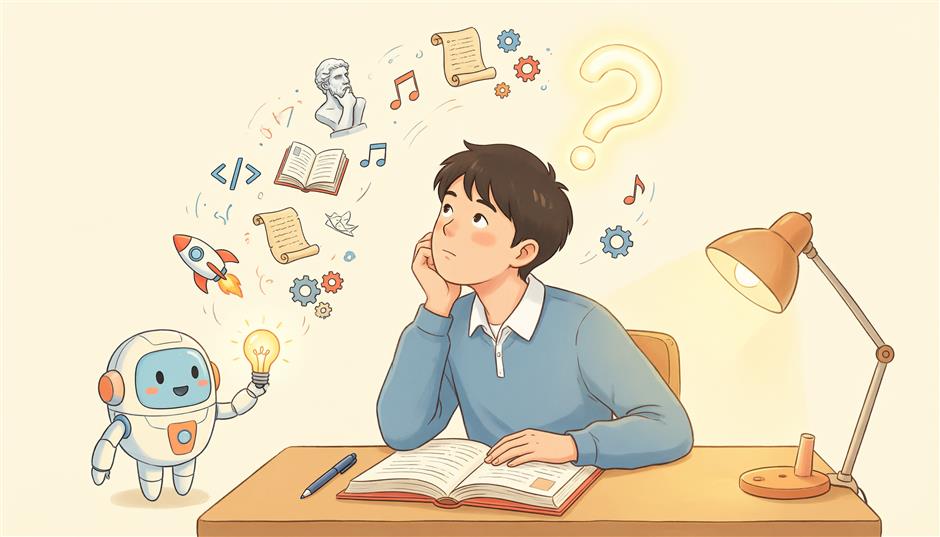
If machines can already write so much code, Eddie asked us, what’s the sense to learning to program? Interesting question. If AI keeps improving at the very things he is good at, how can he know whether a computer science degree will lead anywhere?埃迪问我们,如果机器现在已经能写这么多代码了,那学习编程还有什么意义?这是个有趣的问题。如果人工智能在自己擅长的领域持续进步,他又该如何确定计算机科学学位是否能带来什么发展呢?
We spent hours discussing with him technologies, industries and possible careers. We tried to identify the skills employers will most need in the future and which university majors are most likely to remain valuable. The more possibilities we considered, the harder it became to reach a confident conclusion.我们花了数小时和他探讨技术、行业以及可能的职业方向。我们试图找出雇主未来最需要的技能,以及哪些大学专业最可能保持价值。我们考虑的可能性越多,就越难得出一个确定的结论。
Credit: AI-generated来源:AI生成
I”m a journalist and a university teacher. My work involves asking questions, examining evidence and making sense of complicated subjects. Yet when my son asked me to help him choose his future, I could not offer the certainty parents are supposed to provide.我是一名记者,也是一名大学教师。我的工作包括提出问题、核查证据以及解读复杂的议题。然而,当儿子让我帮他规划未来时,我却无法给出父母理应提供的确定答案。
Perhaps it wasn’t that we failed to find the right answer but that question itself had become harder to answer.或许不是我们没能找到正确的答案,而是问题本身变得更难解答了。
For generations, education has encouraged young people to choose a field, master its tools and build a career around their expertise. But what happens when machines become extraordinarily good at mastering the tools?几代人以来,教育一直鼓励年轻人选择一个领域,掌握其相关技能,并围绕自身专业技能开启职业生涯。但当机器变得极其擅长掌握这些技能时,又会发生什么呢?
Confusing expertise with security 将专业能力与安全感混为一谈
Specialization made modern economies possible. Hospitals need trained doctors, factories need skilled engineers, and businesses need able accountants and programmers. Universities developed disciplines and qualifications to prepare people for increasingly complex work.专业化让现代经济成为可能。医院需要训练有素的医生,工厂需要技艺精湛的工程师,企业则需要能干的会计和程序员。大学设立了学科体系和资质认证,为人们应对日益复杂的工作做好准备。
The arrangement offered a compelling bargain. Study hard, acquire expertise and earn a degree that opens the door to a profession. With experience, your skills become more valuable. The longer you work, the more you know.这种安排极具吸引力。努力学习,掌握专业技能并获得学位,以此开启职业生涯。随着经验积累,你的技能会变得更有价值。工作时间越久,你懂得的就越多。
I grew up with much the same understanding. Find something you are good at, work hard at it and become sufficiently accomplished that other people will need you.我也是在这样的认知下长大的。找到自己擅长的事,为之努力奋斗,达到足够出色的水平,让别人都需要你。
There is nothing wrong with that advice. The trouble begins when a sensible principle becomes a promise: Find the right specialty and you will be safe.这条建议本身没有任何问题。麻烦出在当一个合理的原则变成了一种承诺时:找到合适的专业领域,你就会高枕无忧。
That promise was never entirely reliable. Industries decline, technologies change and workers retrain. AI, however, is challenging an assumption that has long underpinned professional life: That the skills we spend years acquiring will remain scarce long enough to support a stable career.这一承诺从来都并非绝对可靠。行业会衰退,技术会更迭,劳动者也需要重新培训。然而,人工智能正挑战着长期支撑职业生涯的一个前提假设:我们花费多年时间习得的技能,将长期保持稀缺性,足以支撑一份稳定的职业。
The World Economic Forum’s Future of Jobs Report 2025, based on a survey of more than 1,000 employers, estimates that 39 percent of workers’ existing skillsets will be transformed or become outdated by 2030. It also projects that 170 million jobs will be created and 92 million displaced globally between 2025-2030, a net increase of 78 million.世界经济论坛《2025年未来就业报告》基于对1000多家雇主的调查估计,到2030年,39%的劳动者现有技能将发生转型或变得过时。该报告还预测,2025至2030年间,全球将新增1.7亿个就业岗位,同时有9200万人将失去工作,净增就业岗位7800万个。
These are employer-based projections, not predictions of any individual’s fate. Nor are all the changes attributable to AI. But they underline a difficult reality: The relationship between education and employment is becoming harder to predict.这些是基于雇主的预测,并非针对任何个人命运的判断。也并非所有变化都可归因于人工智能。但它们凸显了一个严峻的现实:教育与就业之间的关系正变得越来越难以预测。
The answer is not to abandon specialization. Society will always need people who can develop medicines, build bridges, secure computer networks and investigate difficult scientific questions. The problem is treating a specialty as a permanent identity rather than a foundation for further learning.答案并非是放弃专业化。社会永远需要能够研发药物、建造桥梁、保障计算机网络安全以及探究复杂科学问题的人才。问题在于将专业特长当作一种永久的身份,而非进一步学习的基础。
A degree can still open doors. It cannot promise that the world behind those doors will remain unchanged.学历依旧能为你打开一扇扇门,但它无法保证门后的世界永远一成不变。
When the machine can do the work, what is the work worth?当机器能完成工作时,这份工作的价值何在?
Consider computer programming, the field that prompted Eddie’s questions.以计算机编程为例,这正是引发埃迪提出那些问题的领域。
Writing code demands logic, precision and a detailed understanding of how systems work. For years, translating a complex problem into working software was a valuable technical skill. AI tools can now generate, explain and debug code, sometimes at remarkable speed.编写代码需要逻辑、精准,还得深入理解系统的运行原理。多年来,将复杂问题转化为可用的软件一直是一项宝贵的技术技能。而如今,人工智能工具能够生成、解释并调试代码,有时速度还十分惊人。
In a controlled experiment published in 2023, researchers found that developers using GitHub Copilot completed a specific JavaScript programming task 56 percent faster than those without access to the tool. The task involved building an HTTP server, not the full range of work involved in software development. The result cannot tell us how much AI will improve productivity across the profession, but it demonstrates that some tasks can be completed much faster with AI assistance.在2023年发表的一项对照实验中,研究人员发现,使用GitHub Copilot的开发人员完成一项特定的JavaScript编程任务的速度,比无法使用该工具的开发人员快56%。该任务仅涉及搭建HTTP服务器,并非软件开发中的全部工作。这一结果无法告诉我们人工智能将在多大程度上提升整个行业的生产力,但它证明了借助人工智能的辅助,部分任务的完成速度可以大幅提升。
Programmers are not therefore about to become obsolete. Software still has to solve real problems. Generated code must be tested, secured, integrated and maintained. Someone must decide what a system should do, whether it works reliably and whether it is worth building at all.因此程序员并不会就此被淘汰。软件仍需解决实际问题。生成的代码必须经过测试、加固、整合和维护。必须有人来决定系统应具备的功能、运行是否可靠,以及是否值得开发。
Yet the relative value of different abilities may change. When producing code becomes easier, the ability to identify the right problem, define the requirements and judge the proposed solution can become more important.然而不同能力的相对价值可能会发生变化。当编写代码变得更容易时,找出正确问题、明确需求以及评估解决方案的能力就可能变得更为重要。
Imagine a company using AI to build a new app. Generating the code is only one part of the job. Someone must understand what customers actually need, recognize the trade-offs between convenience and privacy, and decide whether the product solves a problem worth solving. A technically impressive app that nobody needs is still a failure.想象一下一家公司利用人工智能开发一款新应用程序。编写代码只是工作的一部分。必须有人真正理解客户的需求,认清便捷性与隐私保护之间的权衡,并且判断该产品是否解决了值得解决的问题。一款技术上十分出色却无人问津的应用程序,最终依然是失败之作。
The same distinction applies beyond programming. AI can help draft a legal document, summarize medical research or prepare a marketing campaign. But producing an answer is not the same as deciding whether it is fair, clinically appropriate or worth pursuing.同样的区分也适用于编程之外的领域。人工智能可以协助起草法律文件、总结医学研究成果或策划营销活动。但生成答案与判断其是否公平、是否符合临床规范以及是否值得推进并非同一回事。
The future may reward people who combine technical competence with judgment and an understanding of human needs. A programmer who understands a business problem, the people using the product and the consequences of getting it wrong may contribute more than someone who can only produce code quickly.未来可能会嘉奖那些兼具技术能力、判断力与对人类需求的理解的人。一个既了解业务问题、又清楚产品使用者以及出错后果的程序员,或许比只会快速编写代码的人做出更大的贡献。
We are not at the end of requiring expertise; we are at a point of change in what expertise must include.我们并非处于对专业知识的需求走向终结之时,而是正处在专业知识所必须包含的内容发生变革的节点。
People who connect the dots 能把零散线索串联起来的人
Elon Musk recently argued for a broad-based education spanning the arts, sciences and engineering. His reasoning was that people need enough general knowledge to formulate good questions for increasingly capable AI systems and robots.埃隆·马斯克近期倡导一种涵盖艺术、科学与工程的通识教育。他的理由是,人们需要足够的通识知识,才能为能力日益强大的人工智能系统和机器人提出优质问题。
His words struck me as Eddie and I debated university majors. They challenge an educational instinct many of us have inherited, namely that you should choose a field, concentrate on it and avoid distractions.在我和埃迪争论大学专业时,他的话让我深受触动。这些话挑战了我们许多人与生俱来的一种教育本能,即你应该选择一个领域,专注于它,避免分心。
Consider Richard Feynman, the Nobel Prize-winning physicist whose work helped transform our understanding of quantum electrodynamics. His reputation rested on formidable technical ability, not on being a dilettante. Yet he was also curious about subjects beyond physics, from art and music to Mayan hieroglyphics, and had a remarkable gift for explaining difficult ideas.想想诺贝尔奖得主、物理学家理查德·费曼吧,他的研究成果极大推动了我们对量子电动力学的认知。他的声望源于其精湛的专业能力,而非作为一名业余爱好者。但他同时也对物理学之外的领域充满好奇,从艺术、音乐到玛雅象形文字,并且拥有阐释复杂概念的非凡天赋。
Feynman’s example is not that knowing a little about everything makes someone exceptional. It is that deep expertise and intellectual curiosity can reinforce each other. Looking at a problem from another angle may reveal an assumption that specialists working within a familiar framework have overlooked.费曼的例子并非说明什么都略知一二就能出类拔萃,而是表明深厚的专业知识与求知欲能够相互促进。从另一个角度审视一个问题,或许能发现那些在熟悉框架内钻研的专家们所忽略的前提假设。
We need people who can go deep without becoming blind to what lies beyond their field.我们需要这样的人:既能深耕专业,又不会对自己领域之外的事物视而不见。
I think of them as integrators. 我把他们视为整合者。
An integrator connects knowledge, people and technologies to achieve something meaningful. In software, that person might understand enough about engineering, design and customer behavior to see why a technically elegant solution will fail in practice. In medicine, it might mean combining scientific evidence with an understanding of a patient’s circumstances. In journalism, it means connecting a statistic to the policy decision behind it and the people who will live with the consequences.整合者联结知识、人与技术,以成就有意义的事。在软件领域,这类人或许对工程、设计和用户行为有足够的了解,能洞悉为何技术上精妙的方案在实际中会失效。在医学领域,这可能意味着将科学证据与对患者病情的理解相结合。在新闻行业,它意味着将一项统计数据与其背后的政策决策以及将承受其后果的人们联系起来。
AI can assist with many of the individual tasks. But someone must still define the purpose, weigh competing priorities and take responsibility for the outcome.人工智能可以协助完成许多具体任务。但仍需有人明确目标、权衡相互冲突的优先级,并为结果承担责任。
This does not mean Eddie should abandon computer science for philosophy, or choose it because it sounds more human than coding. The more interesting possibility is that he could study one seriously while allowing the other to change how he thinks.这并不意味着埃迪应该为了哲学而放弃计算机科学,也不应该因为哲学听起来比编程更具人文气息就选择它。更有意思的可能性是,他可以深入钻研其中一门学科,同时让另一门学科改变自己的思维方式。
Depth gives us something to contribute. Breadth helps us understand where that contribution belongs.深度赋予我们可贡献的价值。广度帮助我们明晰这份价值的归属。
The contradiction in education 教育中的矛盾
There is an uncomfortable question for schools and universities here. We tell students to prepare for a changing world, yet many educational systems reward them for following a prescribed path. Students are encouraged to explore, but their performance is often measured by exams, credentials and the ability to produce the expected answer.对于这里的中小学和大学来说,有一个令人不安的问题。我们告诉学生要为不断变化的世界做好准备,然而许多教育体系却奖励那些循规蹈矩的学生。学生们被鼓励去探索,但他们的表现往往是通过考试、学历证书以及给出标准答案的能力来衡量的。
In China, where a high-stakes examination helps determine access to university, the pressure to make the right choice is understandable. Families want their children’s years of hard work to lead somewhere. They cannot simply ignore employment prospects and hope curiosity will pay the bills.在中国,一场决定大学入学资格的高风险考试左右着学生的未来,因此做出正确选择的压力是可以理解的。每个家庭都希望孩子多年的努力能有回报。他们不能只看就业前景,也不能指望仅凭兴趣就能维持生计。
But if the future is difficult to predict, education cannot be only about identifying the right major and accumulating the right qualifications. It must be about preparing students to change direction when their assumptions no longer hold.但如果未来难以预测,教育就不能只关乎选择合适的专业和积累相应的资质。它必须致力于培养学生,让他们在自身的假设不再成立时能够调整方向。
The World Economic Forum’s report points to rising demand for technological skills, including AI and big data, alongside capabilities such as analytical thinking, creative thinking, resilience and lifelong learning. The message is not that technical skills matter less. It is that technical competence and the capacity to adapt are becoming increasingly intertwined.世界经济论坛的报告指出,对人工智能、大数据等技术技能的需求不断上升,同时也需要分析性思维、创造性思维、抗压能力和终身学习等能力。这并非意味着技术技能不再重要,而是技术能力与适应能力正变得越来越密不可分。
For journalists, learning how to learn is familiar. A good reporter identifies what matters, finds reliable evidence, distinguishes fact from assumption and revises an initial judgment when the evidence changes. Expertise in asking questions is essential, but so is the willingness to question the answers.对于新闻从业者而言,学会如何学习是家常便饭。一名优秀的记者能找准重点,找到可靠的证据,区分事实与假设,并在证据发生变化时修正最初的判断。精通提问至关重要,而愿意质疑答案同样不可或缺。
Students need the same combination. They need rigorous training, technical knowledge and the discipline to finish difficult work. They also need room to follow an unexpected question, read outside their majors and develop interests whose economic value is not immediately apparent.学生们也需要同样的综合素养。他们需要严谨的训练、专业技术知识以及完成艰巨任务的自律性。同时,他们也需要空间去探究突发的问题、跨专业阅读,并培养那些经济价值并非立竿见影的兴趣。
A broad education is no substitute for competence. Curiosity alone does not pay the bills. But a person who can learn, connect ideas and adapt has more ways to respond when circumstances change.广博的教育无法替代专业能力。仅凭好奇心无法维持生计。但一个善于学习、融会贯通且懂得适应的人,在环境变化时拥有更多应对之策。
The goal is not to produce people who know everything. It is to help them keep learning when what they know is no longer enough.目标不是培养无所不知的人,而是帮助他们在自身认知不再足够时持续学习。
What I can tell my son 我想对儿子说的话
After our discussions, Eddie seemed to set aside some of his anxiety, at least for the moment. He did not announce that he had resolved his future. Instead, he went back to doing things that interest him.经过我们的讨论,埃迪似乎暂时放下了一些焦虑,至少此刻是这样。他没有宣布自己已经解决了未来的问题,而是重新去做那些让他感兴趣的事。
He writes a poem every month. He has been adding history books to his shelf. Recently, I noticed a book on philosophy beside his bedside. When we talked, he said he might study philosophy because it interests him, too.他每个月都会写一首诗。他一直在往书架上添历史书。最近,我注意到他床边放着一本哲学书。我们聊天时,他说自己或许也会学哲学,因为这让他感兴趣。
I smiled at that. We had spent hours trying to forecast the labor market, compare emerging technologies and identify the major least likely to become a dinosaur in the work world. My son responded by reading poetry, history and philosophy.我对此笑了笑。我们花了数小时试图预测劳动力市场、比较新兴技术,并找出那些在职场中最不可能被淘汰的行业。而我的儿子则通过阅读诗歌、历史和哲学来充实自己。
He has not given up programming, nor should he. His mathematical ability and technical talent matter. But perhaps his interests are reminding both of us that choosing a field of study need not mean closing every other door.他没有放弃编程,他也不该放弃。他的数学能力和技术天赋至关重要。但或许他的兴趣在提醒我们所有人:选择一个研究领域并不意味着关上其他所有的门。
I still cannot tell him which major will offer the best prospects when he graduates. No honest parent can promise that a degree will retain the same value for the next 30 or 40 years. I can encourage him to take his abilities seriously, remain curious about the world beyond them and resist measuring every interest by its immediate economic return.我仍然无法告诉他哪个专业能在他毕业时带来最好的前景。没有一位坦诚的家长能保证一个学位在未来30到40年里仍保持同样的价值。我能做的是鼓励他认真对待自己的能力,对能力之外的世界保持好奇,并且拒绝用即时的经济回报来衡量每一种兴趣。
This is also where the question becomes personal for me. As a father, I want to give Eddie a reliable map. As a journalist, I know the evidence does not support one. Pretending otherwise would be comforting, but it would not help him prepare for the world he will actually enter.这也是这个问题对我来说变得私人的时刻。作为一名父亲,我想给埃迪一份可靠的人生指引。但作为一名记者,我清楚没有任何证据能证明这样的指引存在。假装有这样的指引或许能让人安心,却无法帮他真正为即将踏入的世界做好准备。
Perhaps the challenge of raising children in the age of AI is not to predict their future accurately. It is to help them face uncertainty without mistaking it for failure.或许在人工智能时代养育孩子的挑战,并非精准预测他们的未来,而是帮助他们直面不确定性,同时不将其误判为失败。
For a long time, education has encouraged us to ask: What do I want to become? In this age, we may need to ask another question: Who will I be able to become when the world changes?长久以来,教育一直鼓励我们去追问:我想成为什么样的人?而在当下这个时代,我们或许还需要提出另一个问题:当世界发生改变时,我又能成为什么样的人?
I cannot promise Eddie a safe career. I can hope he develops the judgment to choose worthwhile problems, the curiosity to explore unfamiliar territory and the resilience to begin again when the answers change.我无法向埃迪保证一份安稳的职业。我只希望他能培养出明辨是非的判断力,去选择有价值的课题;拥有探索未知领域的好奇心,以及在答案改变时重新出发的韧性。
If he becomes a programmer who writes poetry, a philosopher who understands code or something for which we do not yet have a job title, perhaps he will not have strayed from the path.如果他成为一个写诗的程序员、懂代码的哲学家,或是一个我们目前尚无职称的角色,或许他并未偏离正轨。
Perhaps he will have learned that the path was never the point.或许他会明白,这条路从来都不是重点。
(The author is an adjunct research fellow at the Research Center for Global Public Opinion of China, Shanghai International Studies University, and founding partner of 3am Consulting, a consultancy specializing in global communications.)(作者为上海外国语大学中国全球舆情研究院兼职研究员,同时是专注于全球传播领域的咨询机构3am咨询公司的创始合伙人。)
Editor: Liu Qi 编辑:刘琦