China Looks Skyward to a Future of Satellite Internet, Data Center Technology
中國仰望衛星互聯網與數據中心技術的未來
China Shaping the Future 塑造未來的中國
by Zhu Shenshen 由朱申申
[Tech] [科技]
Shanghai Jiao Tong University 上海交通大學
Share Article: 分享文章:
Credit: Zhu Shenshen / China Biz Buzz圖片來源:朱申申 / 中國商業熱點
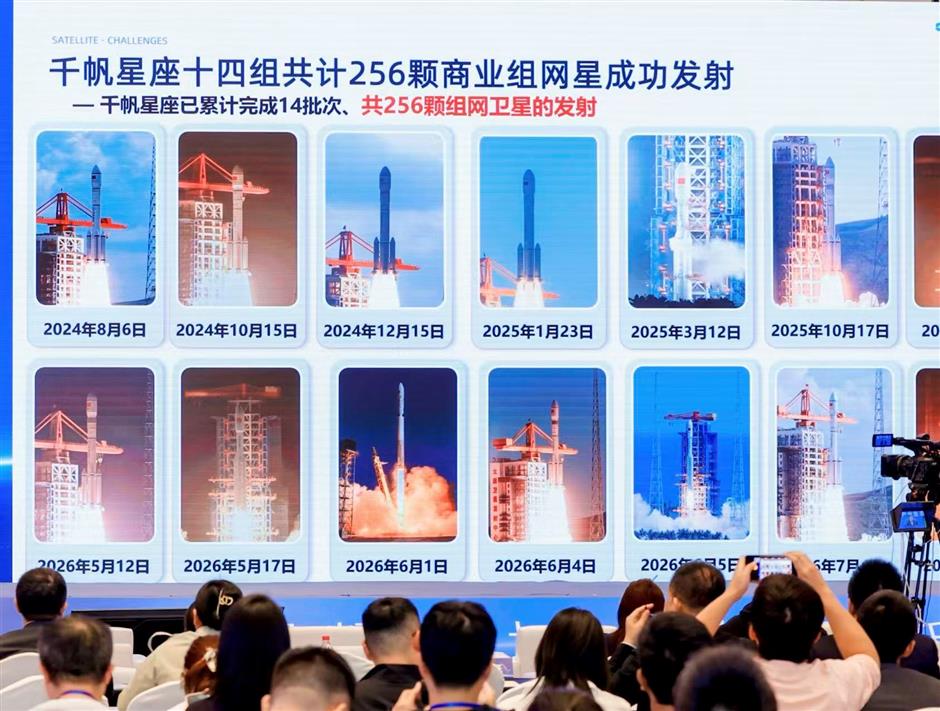
Caption: Shanghai’s SpaceSail now has 256 low-orbit satellites, to hit over 3,000 by 2030.說明:上海星帆目前擁有256顆低軌衛星,到2030年將達到3000顆以上。
The high-stakes space race between China and the US is intensifying far beyond low-Earth orbit, as global aerospace giants vie for orbital dominance and Chinese industry leaders, scientists and policymakers forge a domestic blueprint to overcome existing cost hurdles.中美之間這場高風險的太空競賽正愈演愈烈,範圍早已超出近地軌道。全球航空航天巨頭爭相爭奪軌道主導權,而中國的行業領袖、科學家及政策制定者也在制定國內藍圖,以期攻克現有的成本障礙。
At the 2026 Satellite Internet Industry Ecosystem Conference in Shanghai this week, hundreds of officials gathered to map out the next phase of commercial expansion. The consensus among experts is clear. “China’s satellite internet industry is accelerating the deployment of its network and moving toward large-scale commercial operation,” said Zhang Wenjun, an academician and professor at Shanghai Jiao Tong University.本週在上海舉辦的2026衛星互聯網產業生態大會上,數百名官員齊聚一堂,規劃商業擴張的下一階段。專家們的共識十分明確。中國工程院院士、上海交通大學教授張文軍表示:“中國衛星互聯網行業正加快網路部署,邁向大規模商業化運營。”
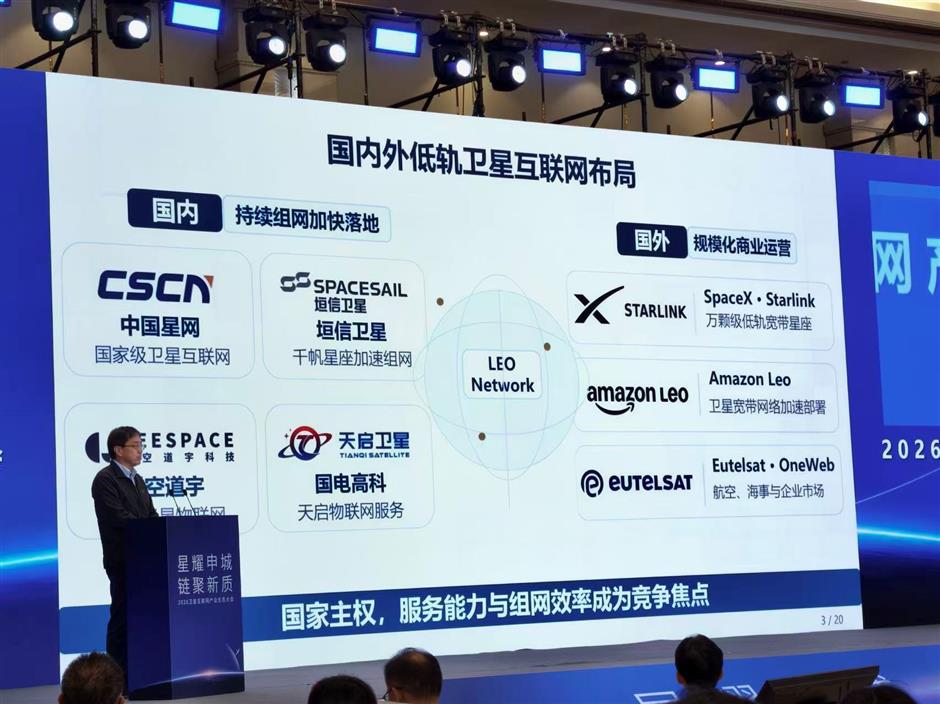
Credit: Zhu Shenshen / China Biz Buzz來源:朱申申 / 中國商業熱點
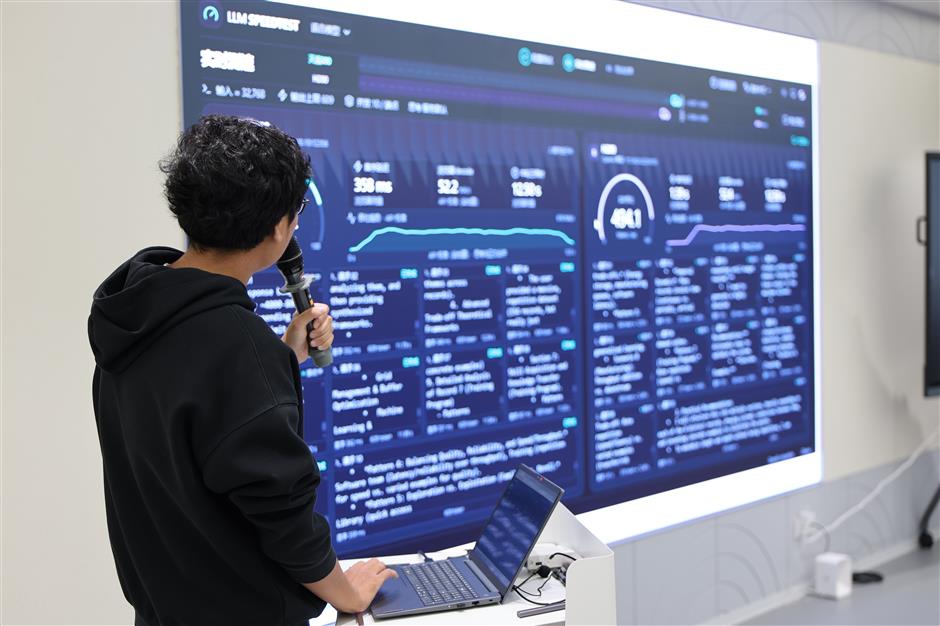
Caption: Zhang Wenjun, an academician and professor at Shanghai Jiao Tong University, talks about China-US space race in a satellite Internet forum in Shanghai.說明:張文軍是上海交通大學院士、教授,他在上海舉辦的衛星互聯網論壇上談及中美太空競賽。
The benchmark for success remains the US, where SpaceX dominates the low-Earth orbit realm with more than 11,000 active satellites and a global customer base exceeding 13.6 million Starlink users. However, Chinese operators are executing a rapid catch-up, anchored by two powerhouses – Beijing-based China Satellite Network Group and Shanghai-backed SpaceSail.成功的標杆仍是美國,SpaceX 憑藉超過1.1萬顆在軌活躍衛星主導近地軌道領域,星鏈(Starlink)全球用戶超1360萬。不過,中國運營商正憑藉兩大巨頭快速追趕——總部位於北京的中國衛星網路集團有限公司,以及上海背景的航天智航(SpaceSail)。
By October, SpaceSail had deployed 256 operational satellites, more than double last year’s total. The company expects to have 324 satellites in orbit by the end of the year, targeting a network of 3,000 satellites by 2030. But the success of all low-orbit operators depends on reusable rockets that reduce costs and increase the availability of launches.截至10月,SpaceSail公司已部署256顆在軌運行衛星,數量超過去年總數的兩倍。該公司預計到今年年底將有324顆衛星入軌,並計劃到2030年建成擁有3000顆衛星的星座。不過,所有低軌運營商的成功都取決於可重複使用火箭——這種火箭能降低成本、提升發射頻次。
China is rapidly closing the technology gap in reusable rocket capabilities and high-capacity payload launches, which enable 20 or more satellites to be deployed on a single mission. Nevertheless, China’s launch costs per satellite remain noticeably higher than those of SpaceX, primarily due to differences in volume and active subscriber density.中國正在迅速縮小可重複使用火箭技術和大載荷發射方面的技術差距,這使得單次任務可部署20顆及以上衛星。不過,受發射量和活躍用戶密度差異影響,中國單顆衛星的發射成本仍明顯高於SpaceX。
By 2030, China is expected to have 10 million space internet users, according to the Ministry of Industry and Information Technology.據工業和信息化部預計,到2030年,中國太空互聯網用戶將達到1000萬。
To counter the vertically integrated model of American aerospace giants, Chinese engineers are pursuing a collaborative, open-architecture framework.爲了應對美國航空航天巨頭垂直整合的模式,中國工程師正在打造一個協作式的開放式架構框架。
“SpaceX is like Apple, with a complete, mature and tightly controlled industry chain,” said Sheng Yinghua, chief research engineer at China Aerospace Science & Technology Corporation Commercial Rocket Co, which was established in 2024. “Our path is to build an ‘Android system’ for space, an open framework that lowers entry barriers and boosts overall industry development.”“SpaceX 就像蘋果公司,擁有完整、成熟且管控嚴格的產業鏈,”2024年成立的中國航天科技集團商業火箭有限公司首席研究工程師盛英華表示。“我們的目標是打造太空領域的‘安卓系統’,這一開放框架能降低行業准入門檻,推動整個產業發展。”
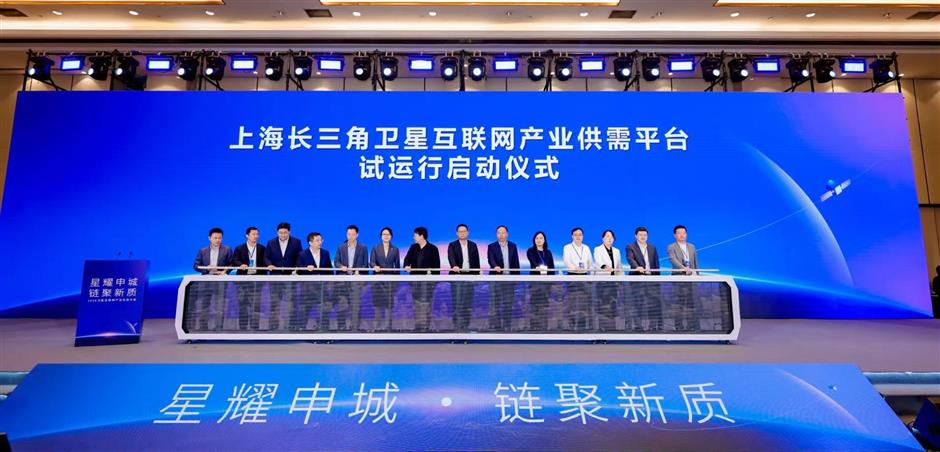
Credit: Ti Gong圖片來源:Ti Gong
Caption: A supply chain platform across the Yangtze Delta region is founded.說明:長三角地區供應鏈平臺正式成立。
Shanghai is taking a central role in driving this open infrastructure. During the conference, municipal authorities unveiled upgraded policies and support platforms designed to build a complete “space-air-ground” integrated communications ecosystem.上海在推動這一開放基礎設施建設方面正發揮核心作用。會議期間,上海市相關部門推出了升級後的政策與支持平臺,旨在構建完整的“空天地”一體化通信生態系統。
The initiative includes a new city-level industrial fund, a next-generation communications accelerator and a unified supply chain platform spanning the entire Yangtze River Delta region. The cross-regional platform brings together research institutes, satellite manufacturers, telecom carriers and commercial rocket companies to drive down costs. Shanghai aims to develop over 100 demonstration projects and expand its core satellite internet industry past 80 billion yuan (US$11.2 billion) by 2030.該舉措包括一項新的市級產業基金、一個下一代通信加速器以及一個覆蓋整個長江三角洲地區的統一供應鏈平臺。這個跨區域平臺整合了科研機構、衛星製造商、電信運營商和商業火箭公司,以降低成本。上海計劃打造100多個示範項目,併力爭到2030年實現衛星互聯網核心產業規模突破800億元人民幣(合112億美元)。
Chinese researchers and private firms are also betting heavily on high-altitude orbits and “space computing” – deploying AI processing directly onto satellite hardware to overcome fundamental spectrum and bandwidth bottlenecks.中國的研究人員和私營企業也在大力押注高軌道和“太空計算”——將人工智能處理能力直接部署到衛星硬體上,以突破頻譜和帶寬的根本性瓶頸。
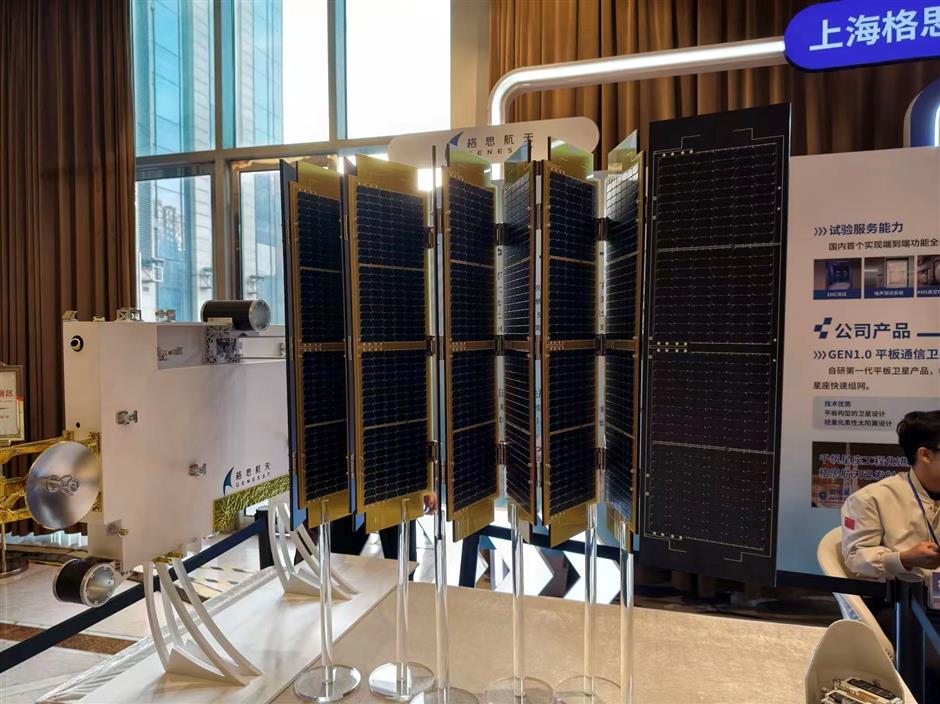
Credit: Zhu Shenshen / China Biz Buzz來源:朱申申 / 中國商業熱點
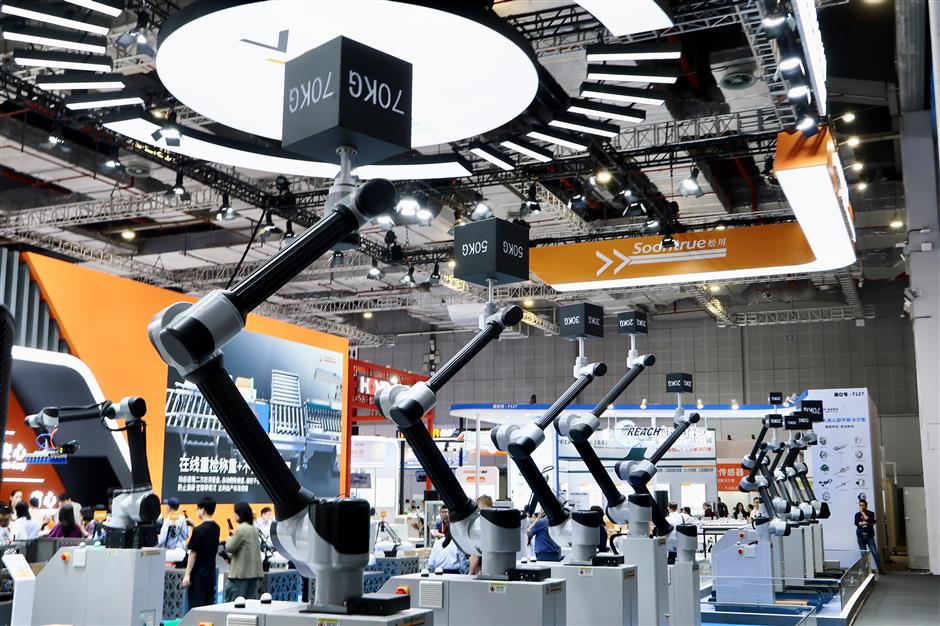
Caption: A Shanghai-based firm showcases components of space computing and communications onsite.說明:一家總部位於上海的企業在現場展示航天計算與通信相關組件。
It’s much cheaper to operate data centers in space, where they can access abundant solar power without night cycles or weather interference. By analyzing, compressing and filtering raw data directly in space using AI, satellites can transmit refined intelligence back to Earth without overloading limited radio frequencies.在太空中運營數據中心的成本要低得多,那裏可以獲取充足的太陽能,且沒有晝夜交替或天氣干擾。通過在太空中直接利用人工智能對原始數據進行分析、壓縮和篩選,衛星能夠將處理後的情報傳回地球,同時不會給有限的無線電頻率造成過載。
A key example of this shift is Fudan University’s newly unveiled Star Nexus project. The initiative plans to deploy over 1,000 space computing satellites in coming years, including 200 units equipped with advanced AI capabilities. These orbital nodes will support high-precision meteorological models, remote-sensing microwave imaging and experimental high-performance quantum computing.這一轉變的一個關鍵案例是復旦大學新公佈的“星核”項目。該計劃計劃在未來幾年部署1000餘顆空間計算衛星,其中包括200顆搭載先進人工智能功能的衛星。這些軌道節點將爲高精度氣象模型、遙感微波成像以及高性能量子計算實驗提供支持。
Chi Nan, deputy president of Fudan University, said Shanghai has an advantage in that domain, with its dense cluster of domestic AI chip designers and optical communications developers.復旦大學副校長遲楠表示,上海在該領域具備優勢,擁有密集的國內人工智能芯片設計企業和光通信研發企業集羣。
“With AI-powered compression and edge processing, customized satellite video services – including real-time video communications and direct streaming – will become a commercial reality,” added Jiao Tong University’s Zhang.“藉助人工智能驅動的壓縮技術和邊緣計算處理,定製化衛星視頻服務——包括實時視頻通信和直接流媒體服務——將成爲商業現實,”上海交通大學的張教授補充道。
Commercial applications are already taking flight. Shanghai-based satellite technology firm Comospace has developed compact “AI boxes” powered by domestic microprocessors designed specifically for processing in a space environment. Several units are currently operating in orbit, processing real-time data for emergency disaster response, precision agriculture and urban planning.商業應用已然落地。總部位於上海的衛星技術公司九天微星已研發出由國產微處理器驅動的緊湊型“AI盒子”,該設備專爲太空環境下的運算而設計。目前已有多臺設備在軌運行,爲應急救災、精準農業和城市規劃處理實時數據。
The rapid expansion of satellite connectivity is also spilling over into adjacent terrestrial industries, particularly China’s burgeoning low-altitude sector, which includes drones and emerging “flying cars.”衛星連接的快速擴張也正滲透到相鄰的地面產業,尤其是中國蓬勃發展的低空領域,該領域包括無人機以及新興的“飛行汽車”。
Xu Yunxiang, vice president of SpaceSail, emphasized that global satellite coverage solves long-standing communication blind spots for uncrewed aerial vehicles. By guaranteeing real-time, beyond-line-of-sight control and telemetry, commercial satellite networks are creating the digital highway required for autonomous drone logistics and advanced air mobility to scale up safely across the country.宇帆航天副總裁徐雲祥強調,全球衛星覆蓋解決了無人機長期存在的通信盲區問題。商業衛星網路通過保障實時超視距控制與遙測數據傳輸,正在打造數字通道,爲無人機自主物流和先進空中交通在全國範圍內安全規模化發展提供支撐。
Editor: Liu Qi 編輯:劉琦