Beyond the Breakthrough: Can Protein-Destroying Drugs Deliver Better Treatment?
突破之外:蛋白降解药物能否带来更优治疗?
by Tan Weiyun 作者:谭伟云
[Biopharma] [生物制药]
Share Article: 分享文章:
After two decades of promise, a new way of destroying disease-causing proteins has finally reached the market. Now targeted protein degradation faces a tougher test: whether it can produce medicines that are not just novel, but better.经过二十年的发展前景铺垫,一种全新的致病蛋白降解技术终于推向市场。如今,靶向蛋白降解技术正面临更严峻的考验:它能否研发出不仅新颖,而且更优质的药物。
The US Food and Drug Administration in May approved vepdegestrant, or Veppanu, for certain patients with advanced breast cancer carrying ESR1 mutations, marking the first FDA approval of a PROTAC, or proteolysis-targeting chimera. The oral drug recruits the cell’s own protein-disposal machinery to break down the cancer-driving estrogen receptor.美国食品药品监督管理局于5月批准了维普司他(Veppanu)用于携带ESR1突变的部分晚期乳腺癌患者,这是美国食品药品监督管理局首次批准蛋白降解靶向嵌合体(PROTAC)类药物。这款口服药物会调动细胞自身的蛋白降解机制,分解驱动癌症发生的雌激素受体。
The approval gave the field something it had long lacked: proof that the technology could make it all the way from the laboratory to the market.这一批准为该领域带来了它长期以来所缺乏的东西:证明该技术能够完全从实验室走向市场。
But it also raised the bar. 但这也提高了门槛。
“Different targets need different technology approaches,” Dr. Yang Xiaobao told China Biz Buzz at the World Laureates Forum in Shanghai.“不同的目标需要不同的技术路径,”杨晓波博士在上海世界顶尖科学家论坛上接受《中国商业新闻》采访时表示。
The scientist-turned-entrepreneur is the founder and chairman of Gluetacs Therapeutics and has worked on protein degradation since 2013.这位由科学家转型的企业家是 Gluetacs Therapeutics 的创始人兼董事长,自2013年起一直从事蛋白质降解相关研究。
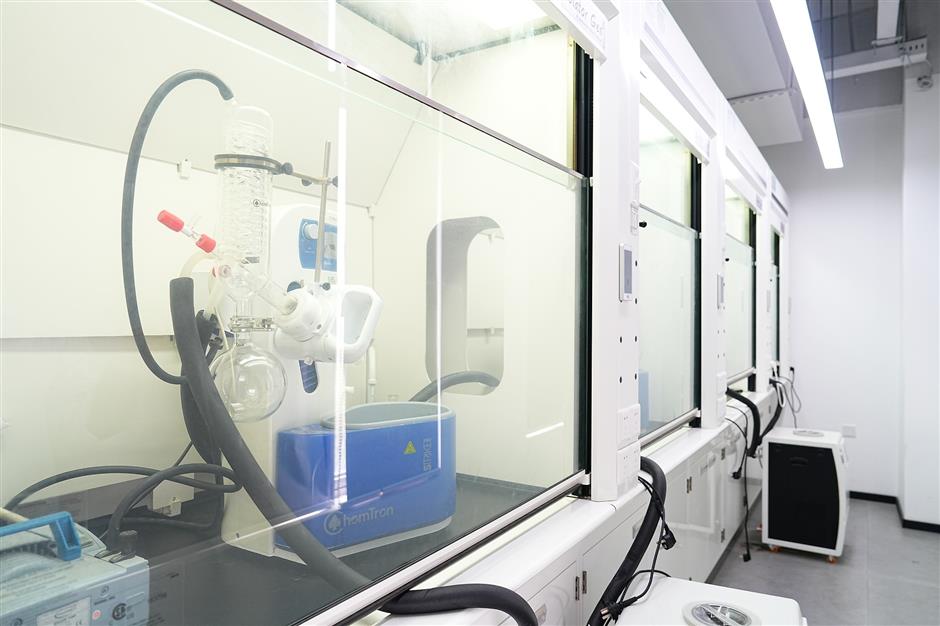
Credit: Ti Gong图片来源:Ti Gong
Caption: A laboratory at Gluetacs Therapeutics in Shanghai, where the biotech company develops targeted protein degradation drugs, including molecular glues and bifunctional degraders.说明:上海 Gluetacs Therapeutics 制药公司的一间实验室,这家生物技术公司在此研发靶向蛋白降解药物,包括分子胶和双功能降解剂。
Protein degraders, he said, will not simply replace inhibitors, or even chemotherapy.他表示,蛋白降解剂并不会简单地取代抑制剂,甚至也不会取代化疗。
Traditional targeted drugs generally work by blocking a particular function of a disease-causing protein. Degraders take a different route: they recruit the cell’s natural waste-disposal system to remove the protein itself.传统靶向药物通常通过阻断致病蛋白的特定功能来发挥作用。降解剂则采取不同的途径:它们招募细胞天然的废物处理系统来清除蛋白本身。
That distinction can matter when a protein does more than one job. Some cancer-driving proteins, for example, also have non-enzymatic functions that conventional inhibitors may leave untouched. Removing the entire protein may block those additional functions and, in some cases, help overcome pathways that allow tumors to escape treatment, Yang said.当一种蛋白质承担不止一种功能时,这种区别就显得至关重要。杨表示,例如,一些致癌蛋白质还具有非酶促功能,而传统抑制剂可能对这些功能毫无作用。去除整个蛋白质或许能阻断这些额外功能,在某些情况下,还有助于克服肿瘤逃避治疗的途径。
Yet making a protein disappear in a laboratory is one thing. Turning that effect into a useful medicine is another.然而,在实验室里让一种蛋白质消失是一回事,而将这种效果转化为有效的药物则是另一回事。
A degrader still has to reach the right tissue, remove enough of the target without causing unacceptable toxicity and, most importantly, improve outcomes for patients.降解剂仍需抵达正确的组织,在不造成不可接受毒性的前提下去除足够的靶标,而最重要的是改善患者的治疗效果。
That challenge is now moving into the clinic.这一挑战如今正进入临床试验阶段。
Yang’s research, which grew out of work at ShanghaiTech University, has produced candidates spanning blood cancers, solid tumors and autoimmune diseases. GT919, a molecular glue being developed for multiple myeloma, has reported Phase I data, while Yang said the program is moving into Phase II development. GT818, a bifunctional degrader targeting solid tumors, has entered Phase I and had reached its second dose cohort.杨的研究源于上海科技大学的相关工作,已研发出涵盖血液癌症、实体瘤和自身免疫性疾病的候选药物。用于治疗多发性骨髓瘤的分子胶GT919已公布一期临床试验数据,杨表示该项目正进入二期研发阶段。针对实体瘤的双功能降解剂GT818已进入一期临床试验,并已推进至第二个剂量队列。
The commercial potential is already clear in multiple myeloma. Revlimid, or lenalidomide, long a backbone treatment for the blood cancer, generated US$12.82 billion in worldwide sales for Bristol Myers Squibb in 2021, before generic competition began eroding revenue.其商业潜力在多发性骨髓瘤领域已十分明确。来那度胺(Revlimid)长期以来一直是这种血液癌症的核心治疗药物,在仿制药竞争开始侵蚀其收入之前,2021 年它为百时美施贵宝公司创造了 128.2 亿美元的全球销售额。
Treatment is now moving into a new generation. In August, the FDA granted accelerated approval to BMS’s iberdomide, a cereblon E3 ligase modulator, or CELMoD, for previously treated multiple myeloma. China’s drug regulator followed with a conditional approval in September, bringing the same drug class into the Chinese market.治疗现已迈入新一代。8月,美国食品药品监督管理局(FDA)加速批准了百时美施贵宝公司(BMS)的伊比沙米德上市,这是一种脑蛋白E3连接酶调节剂(CELMoD),用于治疗既往接受过治疗的多发性骨髓瘤。中国药品监管部门随后于9月附条件批准该药上市,使同类药物进入中国市场。
The opportunity in China is also expanding as patients live longer with the disease. Yang described the country’s multiple myeloma population as sizable, while advances in treatment are increasingly turning the cancer into a condition that can be managed over many years for some patients, extending demand well beyond newly diagnosed cases.随着患者带病生存期的延长,中国市场的机遇也在不断扩大。杨将中国多发性骨髓瘤患者群体描述为规模庞大,而治疗技术的进步正逐渐使部分患者的癌症转变为一种可长期管理的疾病,这使得相关需求远超新确诊病例的范畴。
That is the market GT919 is targeting. Yang said the candidate is designed to improve selectivity and tolerability in multiple myeloma, particularly for patients who relapse or become resistant to existing therapies.这就是GT919瞄准的市场。杨表示,该候选药物旨在提高多发性骨髓瘤的选择性和耐受性,尤其针对对现有疗法复发或产生耐药性的患者。
The opportunity is also expanding beyond cancer. Developers are testing protein degradation in autoimmune and inflammatory diseases, while Yang said later programs from his team are also moving into autoimmune conditions.这一应用场景也正突破癌症领域。研发人员正在自身免疫性和炎症性疾病中测试蛋白质降解技术,而杨随后表示,其团队的相关项目也正向自身免疫性疾病领域拓展。
For Chinese biotechs, the next inflection point may be as much commercial as scientific.对于中国生物科技公司而言,下一个转折点可能在商业化和科研领域同样重要。
Yang said early human data can sharply change how overseas drugmakers value an asset.杨表示,早期人体试验数据可能会极大地改变海外制药商对一项资产的估值。
“If safety can hold up and we can also see some efficacy,” he said,adding that foreign drugmakers are generally more willing to pay for the risk attached to an early-stage program.“如果安全性能够得到保障,同时我们也能看到一定的疗效,”他表示,并补充说,外国制药公司通常更愿意为早期项目相关的风险买单。
His team is already in discussions with multinational pharmaceutical companies and has received interest in licensing one of its assets overseas.他的团队已在与跨国制药公司展开洽谈,并且其一项资产已收到海外授权许可的意向。
That reflects a broader change in drug development: owning an interesting platform is no longer enough. As more degraders enter human trials, clinical data are becoming the dividing line between technological promise and commercially valuable assets.这反映了药物研发领域更广泛的变革:拥有一个有趣的平台已不再足够。随着越来越多的降解剂进入人体试验,临床数据正成为区分技术前景与商业价值资产的分界线。
The first approved PROTAC answered one question: this approach to targeted protein degradation can produce a medicine.首个获批的PROTAC解答了一个问题:这种靶向蛋白降解方法能够研发出药物。
The next generation now has to answer a harder one: when is degradation actually the better way to treat disease?下一代现在必须回答一个更棘手的问题:在什么情况下,降解疗法实际上是治疗疾病的更佳选择?
For Yang, the answer depends on the target.对杨来说,答案取决于靶点。
Inhibitors will not disappear, he said. Neither will chemotherapy. The task is to choose the right tool for the right biological problem.他表示,抑制剂不会消失,化疗也是如此。我们的任务是为恰当的生物学问题选择合适的工具。
That may ultimately be the clearest sign that protein degradation is maturing: success will depend less on whether a drug is called a PROTAC or a molecular glue than on whether it is simply a better medicine.这或许最终是蛋白质降解技术走向成熟的最明确信号:成功与否将不再取决于一种药物被称为PROTAC还是分子胶,而在于它是否真的是更优质的药物。
Editor: Yao Minji 编辑:姚敏吉